zhuang@linux:~/reading/computer-networking-a-top-down-approach/01-computer-networks-and-the-internet/$ less
Computer Networks and the Internet
This post extracts some knowledge from Computer Networking: A Top-Down Approach Chapter 1 – Computer Networks and the Internet.
What is the Internet?
What is the Internet?
- its hardware and software components
- an infrastructure for providing services to distributed applications
What Is a Protocol?
A protocol defines the format and the order of messages exchanged between two or more communicating entities, as well as the actions taken on the transmission and/or receipt of a message or other event.
The Network Edge
The three most prevalent types of broadband residential access are digital subscriber line (DSL), cable, and fiber to the home (FTTH).
LAN technology: Ethernet, WiFi
Wide-Area Wireless Access: 4G and 5G
Physical Media:
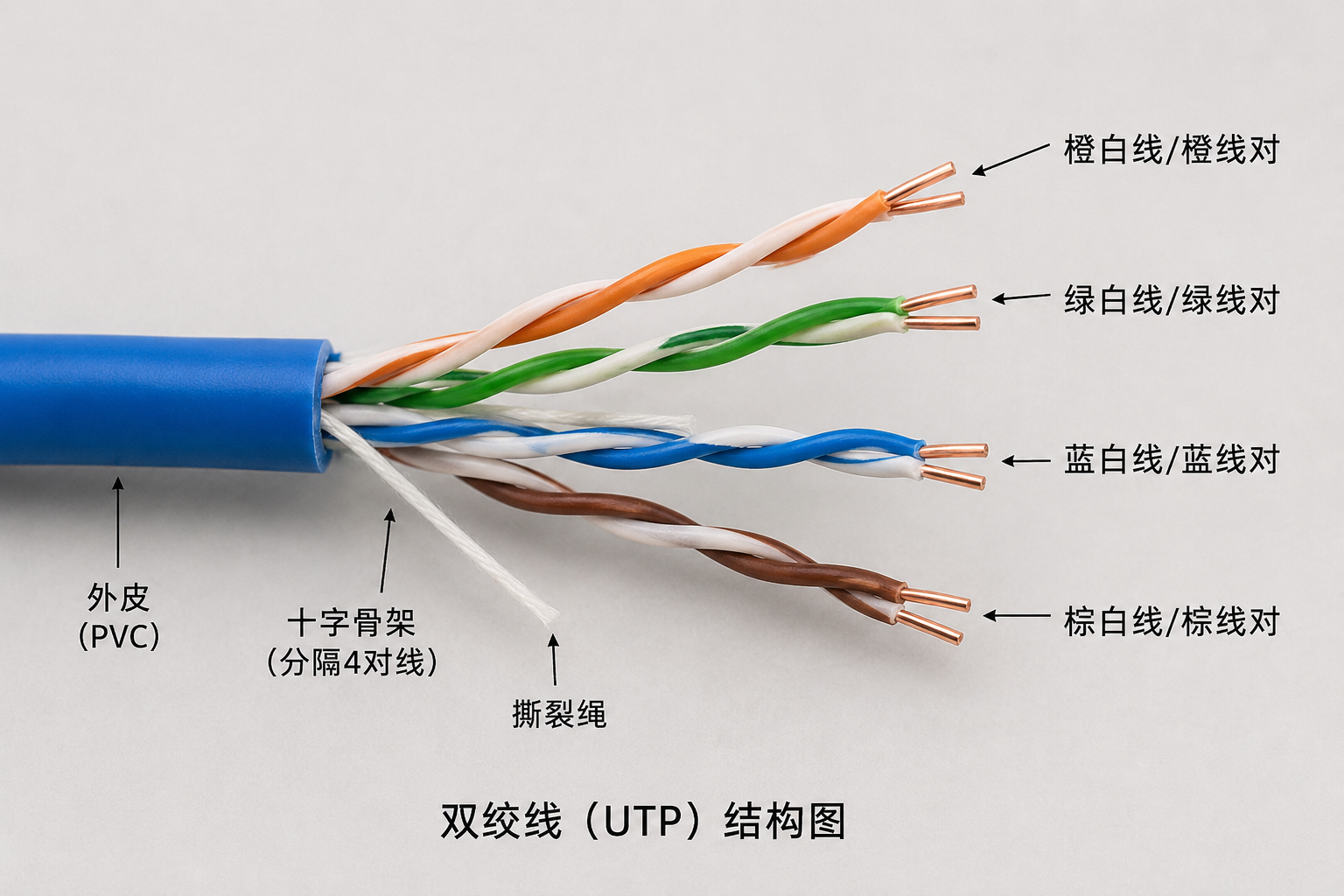
Twisted-Pair Copper Wire:
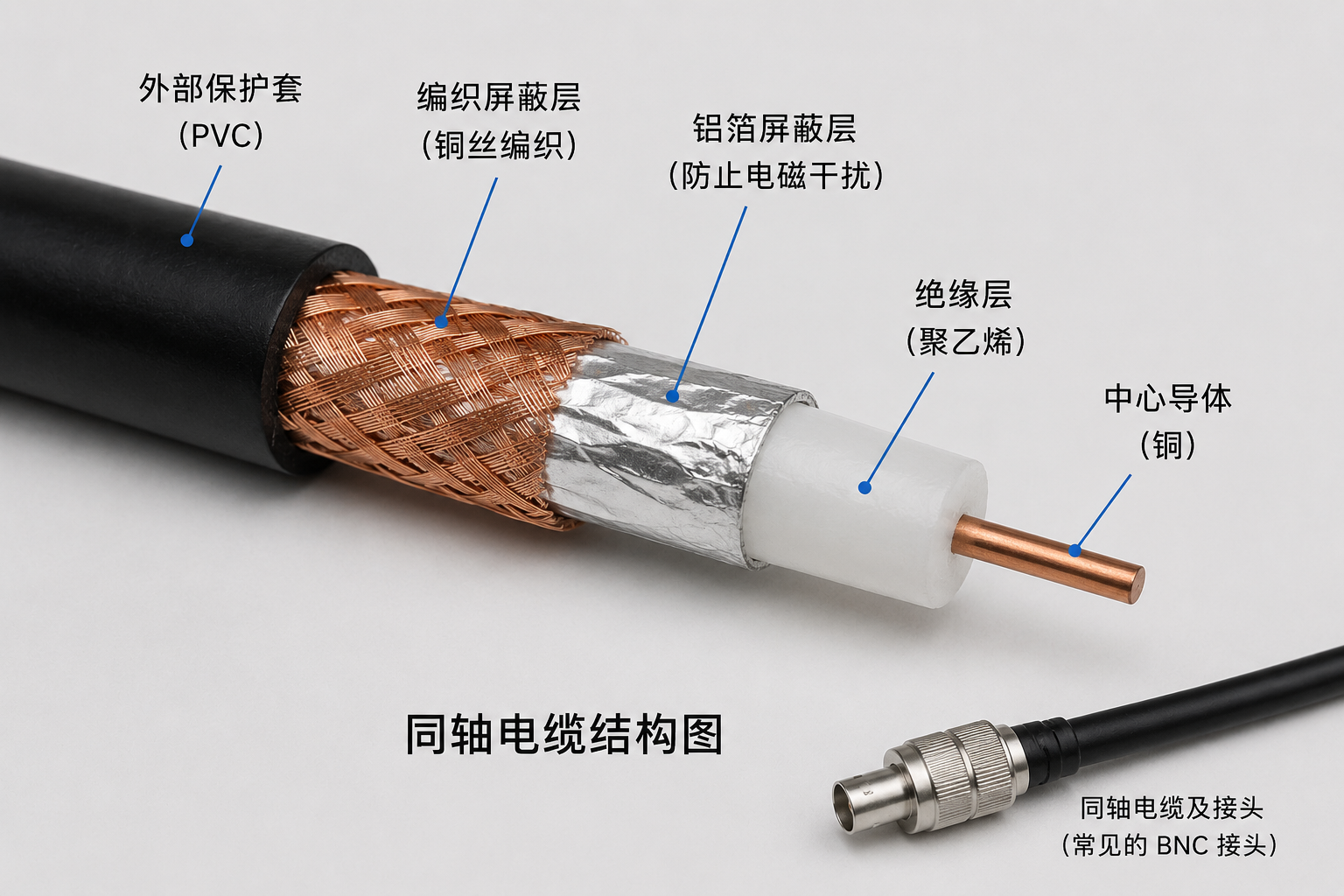
 Coaxial Cable:
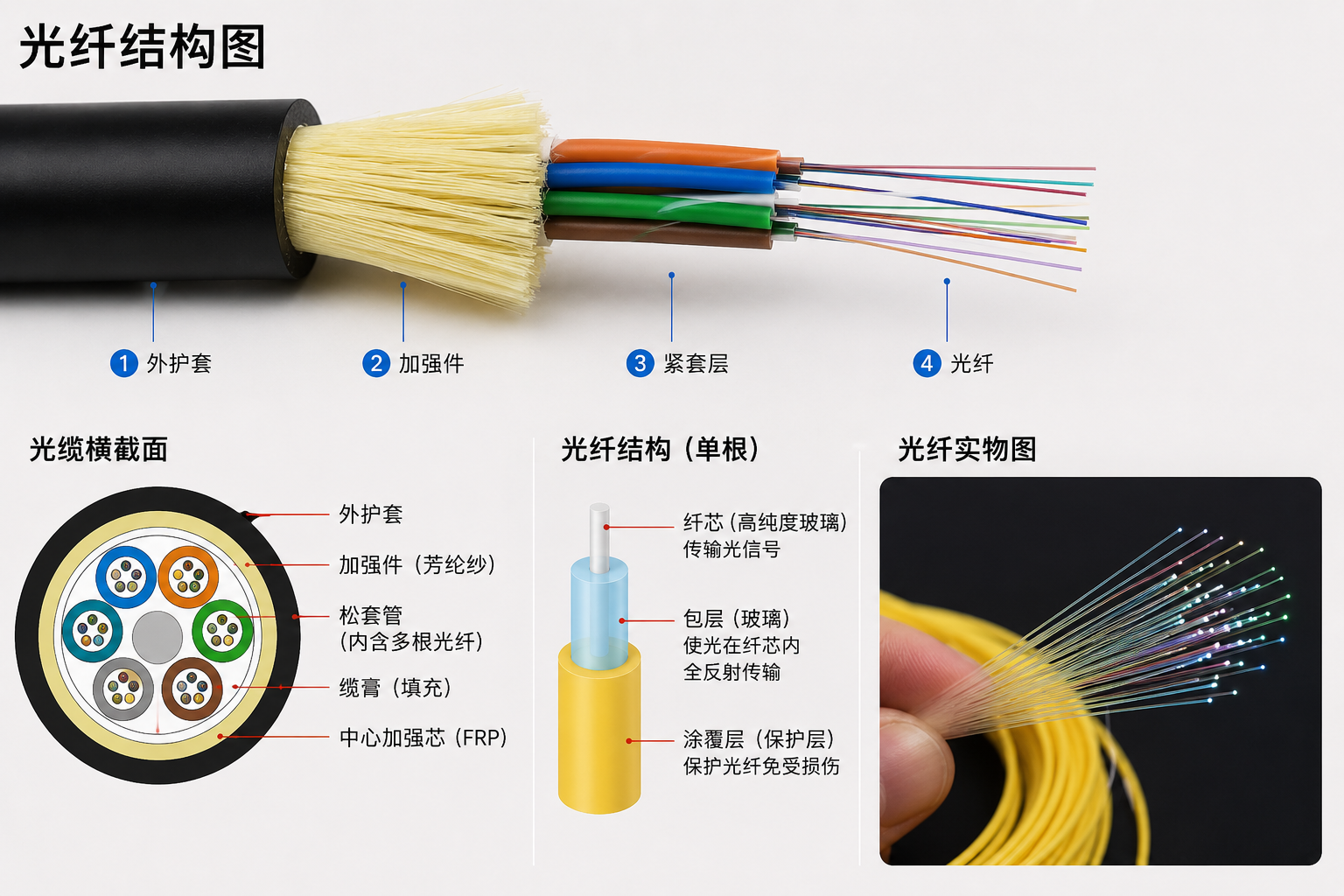
 Fiber Optics:
The Network Core
Store-and-Forward Transmission
Queuing Delays and Packet Loss
Packet Switching Versus Circuit Switching
A Network of Networks
We refer to this ecosystem—consisting of access ISPs, regional ISPs, tier-1 ISPs, PoPs, multi-homing, peering, and IXPs — as Network Structure 4.
Network Structure 5, builds on top of Network Structure 4 by adding content-provider networks.
Delay, Loss, and Throughput in Packet-Switched Networks
The most important of delays are the nodal processing delay, queuing delay, transmission delay, and propagation delay; together, these delays accumulate to give a total nodal delay.
The transmission delay is the amount of time required for the router to push out the packet; it is a function of the packet’s length and the transmission rate of the link, but has nothing to do with the distance between the two routers. The propagation delay, on the other hand, is the time it takes a bit to propagate from one router to the next; it is a function of the distance between the two routers, but has nothing to do with the packet’s length or the transmission rate of the link.
Protocol Layers and Their Service Models
| Layer | Packet name |
|---|---|
| Application layer | Message |
| Transport layer | Segment |
| Network layer | Datagram |
| Link layer | Frame |
Networks Under Attack
Most Internet DoS denial-of-service (DoS) attacks fall into one of three categories:
- Vulnerability attack. Well-crafted messages injection.
- Bandwidth flooding. The attacker sends a deluge of packets to the targeted host.
- Connection flooding. The attacker establishes a large number of half-open or fully open TCP connections.
We should keep in mind that communication among mutually trusted users is the exception rather than the rule.
zhuang@linux:~/reading/computer-networking-a-top-down-approach/01-computer-networks-and-the-internet/$ comments